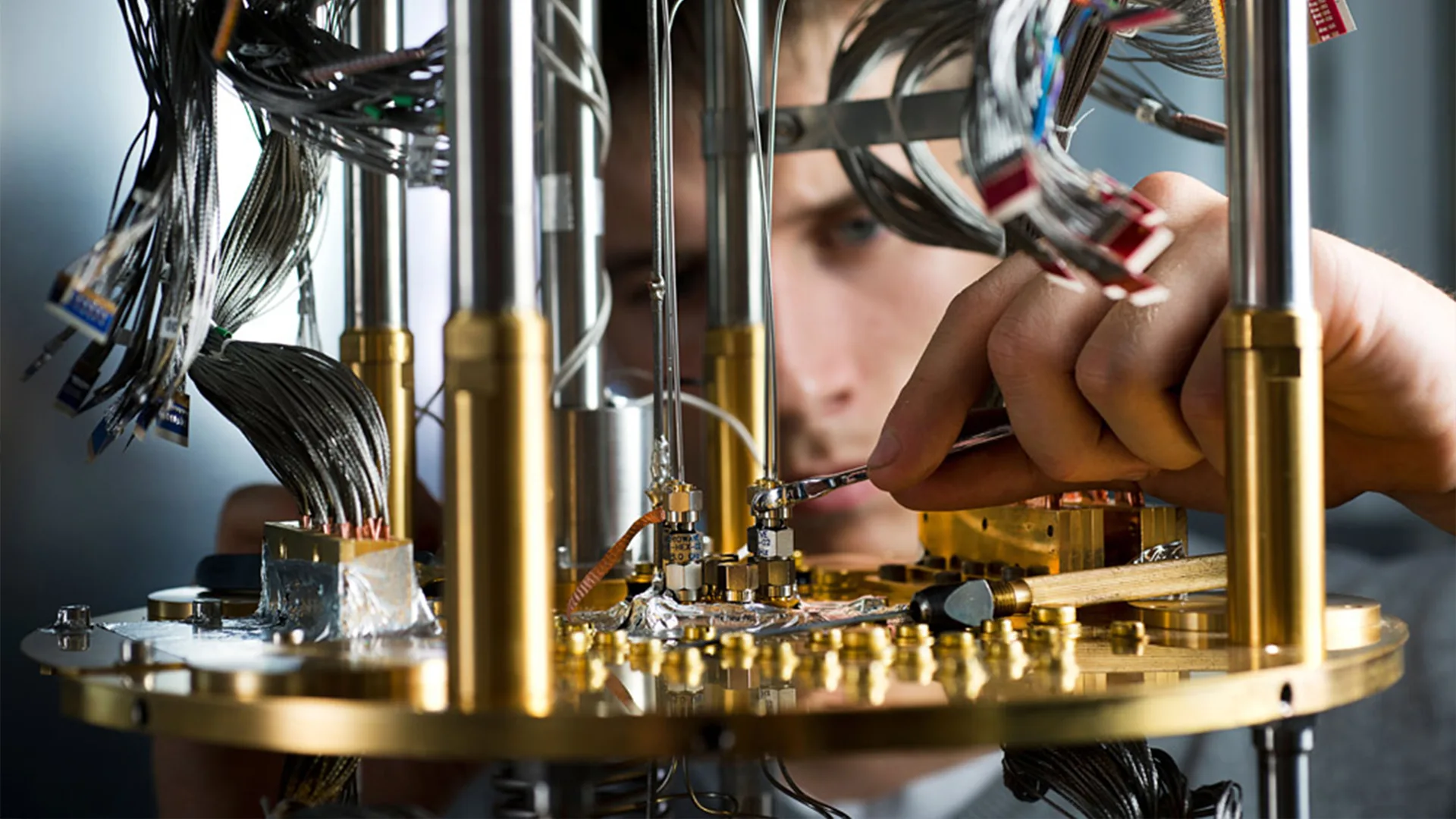
Introduction to QUBT
In recent years, the term QUBT has been gaining traction across tech communities, investment circles, and innovation hubs. While it might sound like just another acronym in the ever-growing world of technology, represents something far more significant. It is often associated with cutting-edge developments in quantum computing and next-generation data processing, making it a topic worth understanding in depth.
At its core, is tied to the evolution of computational power. Traditional computing has long relied on binary systems—ones and zeros—to process information. However, as data complexity grows and industries demand faster, more efficient solutions, the limitations of classical computing have become increasingly apparent. This is where enters the conversation, offering a pathway to unprecedented computational capabilities.
What makes especially interesting is how it blends theoretical science with practical applications. It’s not just a concept confined to academic research anymore. Businesses, governments, and investors are actively exploring its potential. As a result, understanding is no longer optional for those who want to stay ahead in the tech landscape—it’s essential.
What Exactly is QUBT?
QUBT is often used in contexts related to quantum technologies, particularly as a shorthand or symbolic reference to quantum bits, also known as qubits. Unlike classical bits, qubits can exist in multiple states simultaneously thanks to the principle of superposition. This single feature alone opens the door to solving problems that would take classical computers millions of years to process.
To put it simply, if traditional computing is like flipping a switch on or off, is like having a dimmer that can be set to countless levels at once. This flexibility allows for massively parallel computations, making it ideal for tasks such as cryptography, molecular modeling, and complex optimization problems.
Another defining feature of is entanglement. This phenomenon allows qubits to be interconnected in such a way that the state of one directly influences the state of another, regardless of distance. This level of connectivity enhances computational speed and efficiency, pushing the boundaries of what machines can achieve.
The Technology Behind QUBT
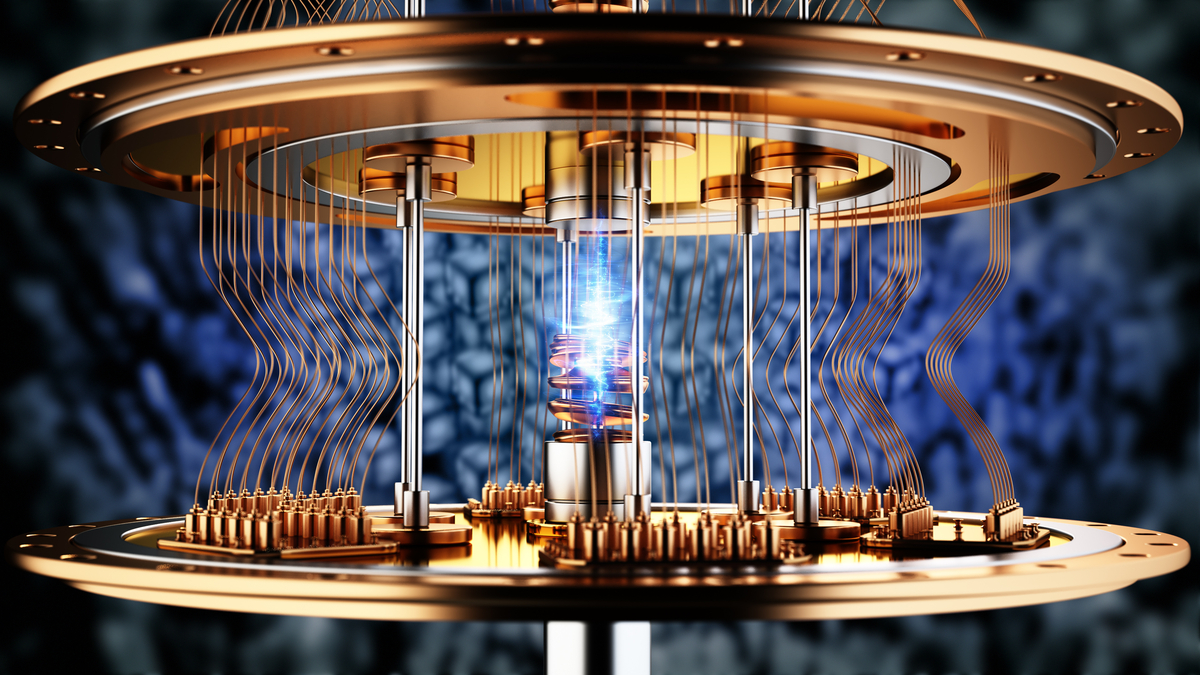
The technology driving QUBT is rooted in quantum mechanics, a field of physics that deals with the behavior of particles at the smallest scales. While the science itself can be complex, its practical implications are becoming increasingly accessible. Companies and research institutions are working tirelessly to turn theoretical breakthroughs into usable technologies.
One of the biggest challenges in developing QUBT-based systems is maintaining stability. Qubits are extremely sensitive to environmental factors like temperature and electromagnetic interference. Even the slightest disturbance can cause errors, a problem known as decoherence. To address this, advanced cooling systems and error-correction algorithms are being developed.
Another key aspect of QUBT technology is scalability. Building a quantum system with just a few qubits is already a significant achievement. However, for QUBT to reach its full potential, systems need to scale to hundreds or even thousands of qubits. This requires not only technological innovation but also breakthroughs in materials science and engineering.
Real-World Applications of QUBT
QUBT is not just a futuristic idea—it is already showing promise in various real-world applications. One of the most notable areas is cryptography. Quantum systems have the potential to break traditional encryption methods, but they also enable the creation of virtually unhackable communication systems through quantum encryption.
In the field of healthcare, could revolutionize drug discovery. By simulating molecular interactions at an atomic level, researchers can identify potential treatments much faster than with traditional methods. This could lead to quicker development of life-saving medications and more personalized treatment plans.
Financial modeling is another area where QUBT is making waves. Markets are incredibly complex systems with countless variables. QUBT-powered algorithms can analyze these variables simultaneously, providing insights that were previously unattainable. This could transform everything from risk assessment to portfolio management.
QUBT in the Investment Landscape
The growing interest in has not gone unnoticed by investors. Venture capital firms and institutional investors are pouring resources into companies that are pushing the boundaries of quantum technology. This has led to a surge in startups focused on -related innovations.
What makes particularly appealing from an investment standpoint is its long-term potential. While the technology is still in its early stages, its impact could be as transformative as the internet or artificial intelligence. Early adopters stand to benefit significantly if the technology reaches mainstream adoption.
However, investing in is not without risks. The field is highly experimental, and there are still many technical hurdles to overcome. As a result, it requires a balanced approach—one that considers both the potential rewards and the inherent uncertainties.
Challenges and Limitations of QUBT
Despite its immense potential, QUBT faces several challenges that cannot be ignored. One of the most significant issues is error rates. Quantum systems are prone to errors due to their sensitivity, and even minor inaccuracies can lead to incorrect results. Developing reliable error-correction methods remains a top priority.
Another limitation is accessibility. technology is still largely confined to research labs and specialized facilities. The cost of building and maintaining quantum systems is extremely high, making it difficult for widespread adoption at this stage.
There is also a knowledge gap to consider. Quantum computing requires a deep understanding of both physics and computer science. As a result, there is a shortage of skilled professionals who can work effectively in this field. Bridging this gap will be crucial for the future of .
The Future of QUBT
Looking ahead, the future of QUBT appears incredibly promising. As technology continues to advance, we can expect to see more practical applications emerge. Industries that rely heavily on data and complex computations will likely be the first to benefit.
One of the most exciting possibilities is the integration of with artificial intelligence. Combining the computational power of quantum systems with the adaptability of AI could lead to breakthroughs that are currently unimaginable. This synergy has the potential to redefine how we approach problem-solving.
Moreover, as research progresses, the barriers to entry will gradually decrease. Costs will come down, systems will become more stable, and knowledge will become more widespread. This will pave the way for broader adoption and innovation.
Conclusion: Why QUBT Matters
QUBT is more than just a buzzword—it represents a fundamental shift in how we think about computing and problem-solving. From its roots in quantum mechanics to its growing role in real-world applications, is poised to become a cornerstone of future technology.
What sets apart is its ability to tackle problems that are beyond the reach of classical systems. Whether it’s revolutionizing healthcare, transforming financial markets, or redefining cybersecurity, its impact could be far-reaching.
For anyone interested in technology, innovation, or investment, keeping an eye on is a smart move. It may still be in its early stages, but its trajectory suggests that it will play a major role in shaping the future.